Cart
Your cart is empty
Looks like you haven’t added anything yet, browse new arrivals below!
Continue Shopping
 Shop NFL
 Arizona Cardinals
 Atlanta Falcons
 Baltimore Ravens
 Buffalo Bills
 Carolina Panthers
 Chicago Bears
 Cincinnati Bengals
 Cleveland Browns
 Dallas Cowboys
 Denver Broncos
 Detroit Lions
 Green Bay Packers
 Houston Texans
 Indianapolis Colts
 Jacksonville Jaguars
 Kansas City Chiefs
 Las Vegas Raiders
 Los Angeles Chargers
 Los Angeles Rams
 Miami Dolphins
 Minnesota Vikings
 New England Patriots
 New Orleans Saints
 New York Giants
 New York Jets
 Philadelphia Eagles
 Pittsburgh Steelers
 San Francisco 49ers
 Seattle Seahawks
 Tampa Bay Buccaneers
 Tennessee Titans
 Washington Commanders
 Shop NCAA
 Air Force Falcons
 Alabama Crimson Tide
 Arizona State Sun Devils
 Arizona Wildcats
 Arkansas Razorbacks
 Auburn Tigers
 Baylor Bears
 Boston College Eagles
 BYU Cougars
 Central Florida Knights
 Cincinnati Bearcats
 Clemson Tigers
 Coastal Carolina Chanticleers
 Colorado Buffaloes
 Connecticut Huskies
 Creighton Blue Jays
 Dayton Flyers
 Duke Blue Devils
 East Carolina Pirates
 Florida Gators
 Florida State Seminoles
 Fresno State Bulldogs
 Georgia Bulldogs
 Georgia Tech Yellow Jackets
 Gonzaga Bulldogs
 Houston Cougars
 Illinois Fighting Illini
 Indiana Hoosiers
 Iowa Hawkeyes
 Iowa State Cyclones
 James Madison Dukes
 Kansas Jayhawks
 Kansas State Wildcats
 Kentucky Wildcats
 Louisville Cardinals
 Louisiana State Tigers
 Marquette Golden Eagles
 Maryland Terrapins
 Memphis Tigers
 Miami Hurricanes
 Michigan State Spartans
 Michigan Wolverines
 Minnesota Golden Gophers
 Mississippi Rebels
 Mississippi State Bulldogs
 Missouri Tigers
 Naval Academy Midshipmen
 NC State Wolfpack
 Nebraska Cornhuskers
 North Carolina Tar Heels
 North Dakota State Bison
 Notre Dame Fighting Irish
 Ohio State Buckeyes
 Oklahoma Sooners
 Oklahoma State Cowboys
 Oregon Ducks
 Oregon State Beavers
 Penn State Nittany Lions
 Pittsburgh Panthers
 Purdue Boilermarkers
 Rutgers Scarlet Knights
 Southern California
 South Carolina Gamecocks
 South Florida Bulls
 St. John's Red Storm
 Stanford Cardinal
 Syracuse Orange
 TCU Horned Frogs
 Tennessee Volunteers
 Texas Longhorns
 Texas A&M Aggies
 Texas Tech Red Raiders
 Tulane Green Wave
 U.S. Military Academy West Point
 Utah Utes
 Vanderbilt Commodores
 Villanova Wildcats
 Virginia Cavaliers
 Virginia Tech Hokies
 Wake Forest Demon Deacons
 Washington Huskies
 Washington State Cougars
 West Virginia Mountaineers
 Western Kentucky Hilltoppers
 Wisconsin Badgers
 Wyoming Cowboys
 Xavier Musketeers
 Shop MLB
 Arizona Diamondbacks
 Atlanta Braves
 Baltimore Orioles
 Boston Red Sox
 Chicago Cubs
 Chicago White Sox
 Cincinnati Reds
 Cleveland Guardians
 Colorado Rockies
 Detroit Tigers
 Houston Astros
 Kansas City Royals
 Los Angeles Angels
 Los Angeles Dodgers
 Miami Marlins
 Milwaukee Brewers
 Minnesota Twins
 Montreal Expos
 New York Mets
 New York Yankees
 Oakland Athletics
 Philadelphia Phillies
 Pittsburgh Pirates
 San Diego Padres
 San Francisco Giants
 Seattle Mariners
 St. Louis Cardinals
 Tampa Bay Rays
 Texas Rangers
 Toronto Blue Jays
 Washington Nationals
 Shop NHL
 Anaheim Ducks
 Boston Bruins
 Buffalo Sabres
 Calgary Flames
 Carolina Hurricanes
 Chicago Blackhawks
 Colorado Avalanche
 Columbus Blue Jackets
 Dallas Stars
 Detroit Red Wings
 Edmonton Oilers
 Florida Panthers
 Hartford Whalers
 Los Angeles Kings
 Minnesota North Stars
 Minnesota Wild
 Montreal Canadiens
 Nashville Predators
 New Jersey Devils
 New York Islanders
 New York Rangers
 Ottawa Senators
 Philadelphia Flyers
 Pittsburgh Penguins
 San Jose Sharks
 Seattle Kraken
 St. Louis Blues
 Tampa Bay Lightning
 Toronto Maple Leafs
 Utah Mammoth
 Vancouver Canucks
 Vegas Golden Knights
 Washington Capitals
 Winnipeg Jets
Looks like you haven’t added anything yet, browse new arrivals below!
Continue Shopping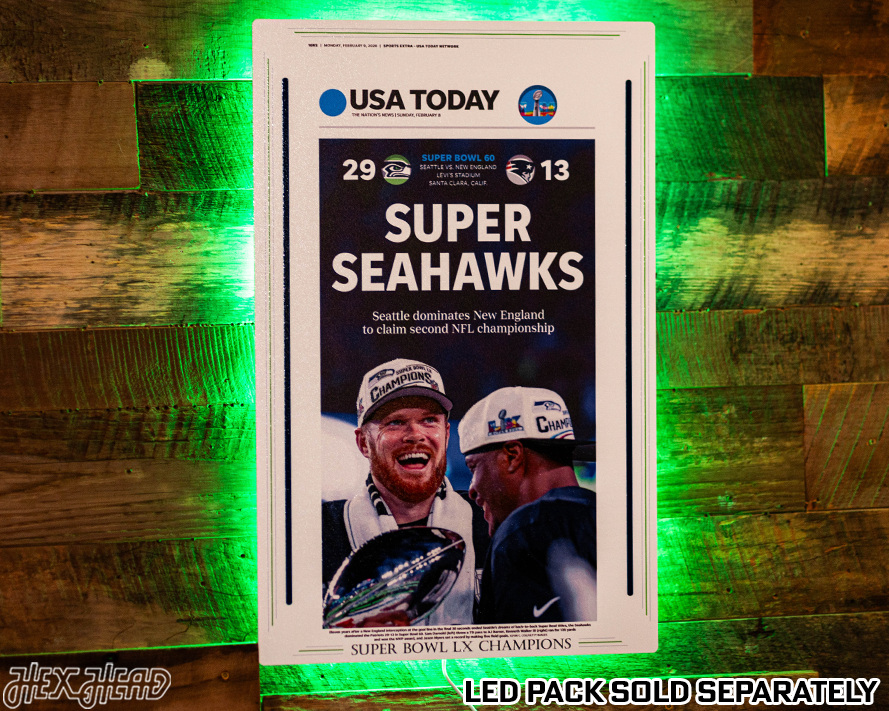
 How to Display Sports Memorabilia Tastefully in 2026
The secret to tasteful sports memorabilia display is treating your fandom like a design decision: anchor the wall with one bold, high-quality focal piece rather than crowding every surface. Hex Head Art's officially licensed 3D layered metal team art — our own product, said plainly — does this exceptionally well: the dimensional steel construction reads as sculptural wall art first, fan piece second. Beyond that anchor, the broader landscape includes framed jerseys, shadow boxes, vintage signage, and commemorative prints, each with its own strengths depending on your space and style.
We make one of these formats, and we'll say so plainly upfront — the comparison table and section analysis below assess every option on its genuine merits. Displaying sports memorabilia tastefully is a design problem before it's a fan problem, and the same principles that govern any well-composed room apply here: scale, cohesion, breathing room, and a clear visual hierarchy.
The difference between a thoughtfully designed sports space and a crowded storage wall comes down to intention, not enthusiasm. Tasteful does not mean toned-down — it means purposeful: every piece earns its place, the color palette holds together, and the wall tells a story rather than just shouting one.
Walk into a room where every surface is covered and your eye has nowhere to rest. Now walk into one where a single large piece anchors the wall, two or three smaller items flank it with breathing room, and the team colors echo into the furniture and paint. Same fandom, completely different impression. The instincts that make a gallery wall work in a design magazine are the same ones that make a sports display look considered rather than accumulated. Define your theme, commit to a scale, and edit ruthlessly. The pieces you pull off the wall often do as much work as the ones you leave on it.
Before you hang anything else, identify the single strongest piece on the wall — the one that establishes scale, tone, and color for everything around it. Everything else should be selected in relationship to that anchor, not in competition with it.
This is where three-dimensional layered metal art earns its place in the conversation. A flat poster or standard print sits on a wall; a dimensional steel piece occupies it — the shadow depth and material weight give it visual presence that competes with furniture, not just other frames. For sports fans, that quality matters because it signals craft and permanence rather than merchandise. If your team plays in the NFL, MLB, NHL, or a college conference, browsing the NFL metal wall art collection or the equivalent league lineup is a practical starting point for finding that anchor. Mount it centered above a sofa, media console, or bed headboard at true eye level — roughly 57 to 60 inches to the center of the piece — and give it at least six to eight inches of clear space on every side before the next object begins.
| Format | Best for | Durability | Price feel |
|---|---|---|---|
| 3D layered metal team art (Hex Head Art) | Bold focal wall piece, any room style | Powder-coated steel — built to resist wear and fading | Mid to premium; strong perceived value |
| Framed jersey or uniform | Honoring a specific era or cherished moment | Fabric fades over time without UV-protective glass | Mid to high depending on framing quality |
| Shadow box display | Grouping small keepsakes, tickets, pins | Good if properly sealed | Budget-friendly to mid-range |
| Commemorative front-page steel prints (Sports Illustrated, USA Today, NY Times) | Championship moments; gift-worthy narrative pieces | Steel print under protective glass — durable, glare-managed | Approachable entry price |
| Vintage-style dimensional metal signs | Retro or bar-room aesthetic | Metal core holds up well in most environments | Mid-range; strong visual payoff |
| Floating shelf gallery | Rotating collection — cards, figurines, signed items | Varies by individual item material | Flexible; works at any budget |
Competitor price ranges in this table are general market estimates based on typical retail; the Hex Head Art row reflects that brand's actual catalog pricing structure.
Once your anchor is placed, supporting pieces should add texture and narrative without pulling the eye in three different directions at once. The goal is a conversation between objects, not a shouting match.
Framed jerseys work beautifully when treated as art rather than laundry — float the jersey inside the frame with a clean mat, use UV-protective glass to slow color shift, and hang it the way you'd hang a fine art print, not the way you'd hang it on a hook. Shadow boxes serve a different role: they're ideal for small keepsakes, ticket stubs, game programs, and pins that individually lack visual weight but collectively tell a game-day story. Group items by theme or color family inside the box rather than by acquisition date. Floating shelves give a rotating collection — figures, cards, signed balls — room to breathe and evolve. The key is leaving negative space on the shelf; a shelf filled edge to edge reads as storage, not a display.
Commemorative front-page pieces from publications like Sports Illustrated, USA Today, and the New York Times bring something none of the above can replicate: the actual historical record of a moment. A championship headline in print carries journalistic authority and narrative weight that bridges sports fandom and genuine print art. They arrive as steel prints finished under protective glass — hang them with the same care as fine art, and they work especially well as a mid-size supporting piece beside a larger metal anchor.
Limit your wall's active palette to two or three colors, and anchor that palette to your team's primary colors while letting those hues extend into the room's soft goods and paint. That extension is what transforms a sports wall into a designed space.
Powder-coated metal finishes integrate cleanly into this system because the color is controlled, matte, and consistent — no glare competing with the room's lighting and no unpredictable variation between pieces. Where displays most commonly fall apart is when two or three different team color schemes land on the same wall — navy and gold fighting with red and black, neither winning. If you display multiple teams, consider separating them spatially across different walls or rooms, or find a neutral ground color — charcoal, cream, natural wood — that each team's palette can coexist against. When in doubt, one team per wall is a rule worth keeping.
The assumption that sports memorabilia belongs only in a dedicated game room is worth challenging — sculptural wall art, military tribute pieces, and Americana-style décor cross into general interior design more naturally than most people expect.
Entryways reward boldness: a single large-format statement piece at the end of a hallway or centered on a foyer wall creates immediate impact without requiring surrounding context. Offices benefit from smaller, cleaner pieces hung at desk-adjacent eye level — something that reads as intentional décor in a video call background. For living rooms, the gallery wall approach works when built with genuine intention: a clear grid or salon arrangement, consistent frame styles or material finishes, and a color palette that respects what's already in the room. Military branch tribute pieces and Americana art from the military branch collection and the Americana collection occupy a particularly useful middle ground — they read as heritage décor to guests who aren't fans and as deeply personal statements to those who are.
If you're working with a tighter budget on the supporting pieces, the Under $99 collection is a practical place to find complementary pieces without compromising the investment you've made in the anchor. If someone else is offering to help furnish a room, point them toward the anchor piece and let the smaller supporting items come out of your own budget — the anchor sets the tone for everything else, and that's where the design investment pays off most visibly.
A display that includes at least one piece tied to a specific date, name, or moment crosses a threshold from fan collection to personal archive — and that shift in meaning is what makes guests stop and ask about a piece rather than simply notice it.
Custom monogram signs and established-date signs with laser-cut text are the personalization formats available here — a family name rendered in steel, or the founding year of a household's fandom. These work especially well as companion pieces to a larger team anchor: the anchor carries the visual weight, the personalized piece carries the story. Commemorative front pages serve a personalization-adjacent role too — your team's championship year, your school's historic moment, a date that matters to your family. The aim is to move the display away from something that could hang in any fan's home toward something that could only hang in yours. A practical note: if you're still deciding between a custom piece and a catalog piece after the Thanksgiving holiday weekend, order the catalog piece — custom timelines have a way of making December 23rd feel very close, very fast.
If you're building a sports display intended to look designed rather than assembled, the argument for beginning with a three-dimensional layered metal piece is straightforward: it reads as sculpture, carries the visual authority of a focal point, and integrates into room types beyond a dedicated sports space without requiring apology or explanation. The officially licensed team art from Hex Head Art spans the NFL, MLB, NHL, and 80-plus NCAA programs, which means the starting point for most fans' teams is already in the catalog.
That said, a complete and tasteful display is rarely a single piece. Framed jerseys carry irreplaceable personal history. Shadow boxes hold the physical texture of lived fandom. Commemorative front pages bring the cultural record of a championship into the room. The honest verdict: each format has a legitimate role in a well-composed display, and none of them should be dismissed. But if you're choosing where to spend your most deliberate design decision first, a dimensional steel anchor built to resist the wear of years is the place to start — and the piece everything else will organize around.
The most reliable principle is to lead with one large anchor piece and surround it with a deliberate, limited supporting cast — typically two or three items with clear breathing room between them. Ten small pieces competing on the same wall create visual noise; one strong sculptural piece flanked by two complementary items reads as a curated arrangement. Grouping by theme or color rather than by accumulation is the practical test: if everything on the wall shares a color family or narrative connection, the display holds together.
Metal wall art with a powder-coated finish is built to resist fading, warping, and the surface degradation that affects fabric and paper over time — making it a strong long-term investment for a display you want to hold up. Fabric-based pieces like framed jerseys benefit from UV-protective glass to slow color shift, and paper prints deserve the same treatment; the commemorative front pages sidestep this, printed on steel with protective glass built in. For high-humidity environments like garages or covered outdoor spaces, metal is the practical choice over any fabric or paper format.
It works well in living rooms when scale and material are chosen intentionally — a large-format 3D metal piece in controlled team colors can anchor a living room wall the way a sculptural art object would, without reading as merchandise. The Americana and military collections cross over most naturally because they carry heritage and craft associations beyond pure fandom. Choosing pieces with clean geometry and a matte finish helps them integrate with existing furniture and wall color rather than competing with them.
Yes — they bring journalistic authenticity and narrative specificity that generic licensed prints can't replicate, making them strong supporting pieces in a layered display. Hex Head Art carries commemorative front pages from Sports Illustrated, USA Today, and the New York Times, which carry the authority of the original publication alongside the fan moment. They come as steel prints finished under protective glass — no framing decisions needed; just give them the same deliberate placement you'd give any fine art piece.
Start with the anchor, not the accessories. A single well-chosen piece in the right scale does more design work than five smaller items scattered across the same wall. If the full-size statement pieces are a stretch right now, the Under $99 collection offers a practical entry point — pieces designed to lead a wall, not just fill one, at a more accessible price. Build the supporting cast gradually as budget allows; the anchor holds the display together in the meantime.
Ready to find the anchor piece your display has been missing? Browse officially licensed team and Americana metal wall art at the Americana collection or navigate directly to your league or military branch — each piece is built to anchor a wall, not decorate it.
What's a Good Gift for a Boy Who Likes Baseball? (2026)
Looking for the perfect baseball gift for a boy? From 3D metal wall art to gear and books, here are the best picks for every budget in 2026.
Read more
Indianapolis Colts Gifts 2026: 10 Ideas He'll Actually Keep
Shopping for a Colts fan in 2026? From 3D metal wall art to game-day gear, here are 10 gifts worth giving — and one that earns a permanent spot on the wall.
Read more
Leave a comment
This site is protected by hCaptcha and the hCaptcha Privacy Policy and Terms of Service apply.