Cart
Your cart is empty
Looks like you haven’t added anything yet, browse new arrivals below!
Continue Shopping
 Shop NFL
 Arizona Cardinals
 Atlanta Falcons
 Baltimore Ravens
 Buffalo Bills
 Carolina Panthers
 Chicago Bears
 Cincinnati Bengals
 Cleveland Browns
 Dallas Cowboys
 Denver Broncos
 Detroit Lions
 Green Bay Packers
 Houston Texans
 Indianapolis Colts
 Jacksonville Jaguars
 Kansas City Chiefs
 Las Vegas Raiders
 Los Angeles Chargers
 Los Angeles Rams
 Miami Dolphins
 Minnesota Vikings
 New England Patriots
 New Orleans Saints
 New York Giants
 New York Jets
 Philadelphia Eagles
 Pittsburgh Steelers
 San Francisco 49ers
 Seattle Seahawks
 Tampa Bay Buccaneers
 Tennessee Titans
 Washington Commanders
 Shop NCAA
 Air Force Falcons
 Alabama Crimson Tide
 Arizona State Sun Devils
 Arizona Wildcats
 Arkansas Razorbacks
 Auburn Tigers
 Baylor Bears
 Boston College Eagles
 BYU Cougars
 Central Florida Knights
 Cincinnati Bearcats
 Clemson Tigers
 Coastal Carolina Chanticleers
 Colorado Buffaloes
 Connecticut Huskies
 Creighton Blue Jays
 Dayton Flyers
 Duke Blue Devils
 East Carolina Pirates
 Florida Gators
 Florida State Seminoles
 Fresno State Bulldogs
 Georgia Bulldogs
 Georgia Tech Yellow Jackets
 Gonzaga Bulldogs
 Houston Cougars
 Illinois Fighting Illini
 Indiana Hoosiers
 Iowa Hawkeyes
 Iowa State Cyclones
 James Madison Dukes
 Kansas Jayhawks
 Kansas State Wildcats
 Kentucky Wildcats
 Louisville Cardinals
 Louisiana State Tigers
 Marquette Golden Eagles
 Maryland Terrapins
 Memphis Tigers
 Miami Hurricanes
 Michigan State Spartans
 Michigan Wolverines
 Minnesota Golden Gophers
 Mississippi Rebels
 Mississippi State Bulldogs
 Missouri Tigers
 Naval Academy Midshipmen
 NC State Wolfpack
 Nebraska Cornhuskers
 North Carolina Tar Heels
 North Dakota State Bison
 Notre Dame Fighting Irish
 Ohio State Buckeyes
 Oklahoma Sooners
 Oklahoma State Cowboys
 Oregon Ducks
 Oregon State Beavers
 Penn State Nittany Lions
 Pittsburgh Panthers
 Purdue Boilermarkers
 Rutgers Scarlet Knights
 Southern California
 South Carolina Gamecocks
 South Florida Bulls
 St. John's Red Storm
 Stanford Cardinal
 Syracuse Orange
 TCU Horned Frogs
 Tennessee Volunteers
 Texas Longhorns
 Texas A&M Aggies
 Texas Tech Red Raiders
 Tulane Green Wave
 U.S. Military Academy West Point
 Utah Utes
 Vanderbilt Commodores
 Villanova Wildcats
 Virginia Cavaliers
 Virginia Tech Hokies
 Wake Forest Demon Deacons
 Washington Huskies
 Washington State Cougars
 West Virginia Mountaineers
 Western Kentucky Hilltoppers
 Wisconsin Badgers
 Wyoming Cowboys
 Xavier Musketeers
 Shop MLB
 Arizona Diamondbacks
 Atlanta Braves
 Baltimore Orioles
 Boston Red Sox
 Chicago Cubs
 Chicago White Sox
 Cincinnati Reds
 Cleveland Guardians
 Colorado Rockies
 Detroit Tigers
 Houston Astros
 Kansas City Royals
 Los Angeles Angels
 Los Angeles Dodgers
 Miami Marlins
 Milwaukee Brewers
 Minnesota Twins
 Montreal Expos
 New York Mets
 New York Yankees
 Oakland Athletics
 Philadelphia Phillies
 Pittsburgh Pirates
 San Diego Padres
 San Francisco Giants
 Seattle Mariners
 St. Louis Cardinals
 Tampa Bay Rays
 Texas Rangers
 Toronto Blue Jays
 Washington Nationals
 Shop NHL
 Anaheim Ducks
 Boston Bruins
 Buffalo Sabres
 Calgary Flames
 Carolina Hurricanes
 Chicago Blackhawks
 Colorado Avalanche
 Columbus Blue Jackets
 Dallas Stars
 Detroit Red Wings
 Edmonton Oilers
 Florida Panthers
 Hartford Whalers
 Los Angeles Kings
 Minnesota North Stars
 Minnesota Wild
 Montreal Canadiens
 Nashville Predators
 New Jersey Devils
 New York Islanders
 New York Rangers
 Ottawa Senators
 Philadelphia Flyers
 Pittsburgh Penguins
 San Jose Sharks
 Seattle Kraken
 St. Louis Blues
 Tampa Bay Lightning
 Toronto Maple Leafs
 Utah Mammoth
 Vancouver Canucks
 Vegas Golden Knights
 Washington Capitals
 Winnipeg Jets
Looks like you haven’t added anything yet, browse new arrivals below!
Continue Shopping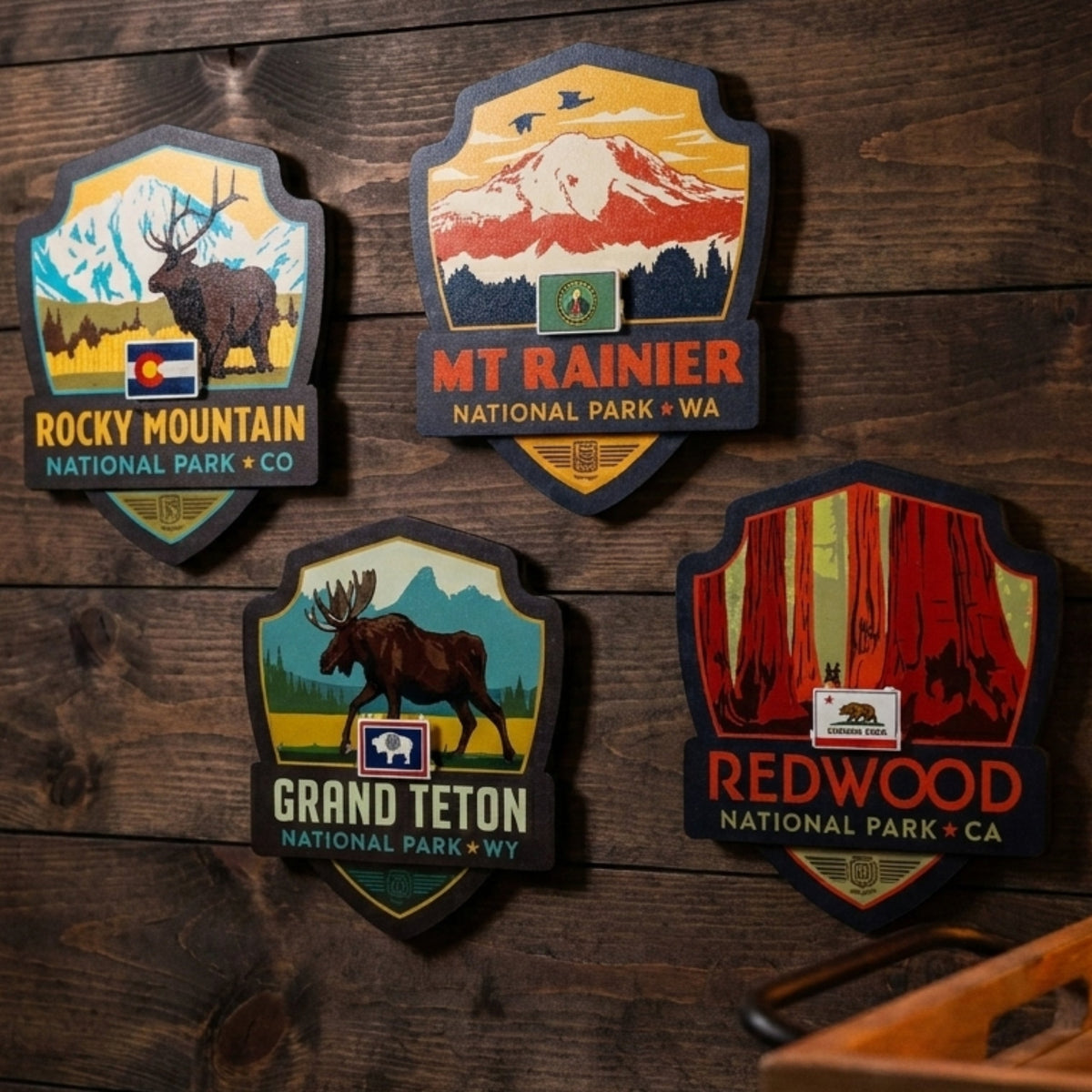
 How to Build the Ultimate Man Cave in 2026: A Room-by-Room Guide
Quick Answer: Start with a clear theme — your team, your branch, your park, your sport — then anchor the walls before touching furniture or tech. Hex Head Art's officially licensed 3D layered metal art — our own product, said plainly — is the standout wall choice: dimensional laser-cut steel layers create real physical depth and shifting shadow lines that posters, canvas prints, and flat metal signs simply cannot replicate. Lock the wall identity first with one quality piece, then build outward with seating, screens, lighting, and personal details. Entry pieces start under $99, and the room you get lasts.
Full disclosure up front: we make one of the formats reviewed in this guide — the 3D layered metal wall art. We'll be clear every time we reference our own products, and we'll give every other category an honest, fair assessment. Building a man cave you're still proud of in five years comes down to decisions made before you spend a single dollar, starting with the theme that anchors everything else.
The plan comes before the purchase, or you end up with a room that looks like a storage unit that happened to have a TV delivered to it. Most man caves go sideways not from bad taste but from no sequence — people buy a recliner, then a neon sign, then a jersey frame, and the room fills up without ever feeling finished. The principle that separates a great man cave from a cluttered den is a single visual anchor, chosen deliberately, with everything else radiating outward from it.
This guide walks through that sequence in order: theme, walls, seating and tech, lighting, and the personal layer that makes the room yours rather than anyone's.
Committing to a theme is the single decision that saves the most money and produces the sharpest-looking result. Walk into any man cave that earns a genuine reaction from visitors and it has a point of view — single-team sports shrine, military tribute, Americana and outdoors lodge, classic sports bar in dark wood and leather — and every object in it is either on theme or invisible.
The main theme categories worth considering:
Wall art is the hardest thing to swap without repainting and replastering, so it should reflect the theme more precisely than anything else in the room. Choose the aesthetic first; let the palette govern every purchase after it.
A wall's visual hierarchy runs from dimensional and structural at the top to flat and disposable at the bottom. Where your anchor piece falls on that scale determines whether the room reads as designed or merely assembled.
The table below compares the main wall art formats honestly. We appear in one row only.
| Format | Best for | Durability notes | Typical price feel |
|---|---|---|---|
| Hex Head Art — officially licensed 3D layered metal art | Theme-anchoring statement walls for sports, military, Americana, and park fans | Powder-coated steel built to resist everyday wear and retain color under typical indoor conditions | Under $99 entry pieces; most standard pieces roughly $100–$200; large-format work $200 and up |
| Framed jersey or memorabilia display | Hardcore collectors with authenticated pieces | Frame and fabric can degrade over time without UV-protective glass; UV glass adds cost | Variable — conservation framing gets expensive quickly |
| Large-format canvas prints | Budget-conscious decorators wanting big visual impact | Canvas can sag and colors can fade over time, particularly in brighter rooms | Generally low to mid — widely available |
| Neon or LED signs | Accent lighting and bar-corner atmosphere | Electronics age; tubes and drivers can burn out and require replacement | Mid range — potential ongoing replacement cost |
| Wood-burned or reclaimed-wood signs | Rustic or cabin-style spaces | Solid when properly sealed; susceptible to moisture in poorly controlled environments | Low to mid |
| Vintage tin signs | Retro and garage-style aesthetics | Lightweight and thin; can dent or scratch; surface graphics can wear | Generally low |
Competitor format notes above are general market observations based on typical retail availability and widely reported category characteristics — not absolute guarantees about every manufacturer. The Hex Head Art row reflects pricing from the brand's verified catalog.
Officially licensed 3D layered steel art earns the top of that wall hierarchy because of how it is constructed: individual layers of steel are laser-cut and assembled to produce real physical depth, not a printed simulation of it. The shadow lines shift with viewing angle and light source, which means the piece stays visually active rather than fading into the background. That dimensional quality gives a room a "this was planned" quality that flat canvas or poster art cannot replicate regardless of image resolution.
For championship rooms specifically, the commemorative front pages — steel prints finished under protective glass, featuring coverage from Sports Illustrated, USA Today, and the New York Times — arrive ready to hang with no additional framing required. A steel-finished championship front page on a fan cave wall carries a different weight than a magazine tucked in a box, and the format fits naturally alongside 3D team pieces without competing with them.
For Americana-themed spaces or rooms honoring military service, the military branch collection and the Americana collection — which includes American flag metal art and national park badge pieces — function as strong theme anchors without leaning on any single team's branding.
For sports-specific rooms, the NFL wall art collection, MLB wall art collection, NHL wall art collection, and NCAA wall art collection — covering 80-plus schools — carry officially licensed pieces with accurate team imagery rather than approximated knock-off graphics.
Seating and screens are where the real budget lands in any man cave build. Getting the wall sorted first means you know exactly what's left — and the math is more honest when you've already made the wall decision rather than leaving it as a vague future line item.
Entry pieces from the Under $99 collection let you establish the room's visual identity without compressing what's left for a sectional or a large-format display. That's the strategic case for starting there.
Size the footprint to the room before falling in love with a particular piece. A sectional that seats eight looks aspirational in a showroom and suffocating in a twelve-by-fourteen room. Recliners give individual control and come in modular configurations; a full sectional gives layout flexibility when the night's activity changes. Leave a walkway between the seating cluster and the nearest wall — a room that breathes always photographs and feels better than one that's maximally packed.
Projectors offer cinematic scale at lower hardware cost but require darkness and a consistently flat projection surface. A large television costs more per diagonal inch but performs in ambient light and installs in an afternoon without calibration sessions. Surround sound doesn't require a full multi-speaker array — a quality soundbar with a dedicated subwoofer reliably outperforms a mediocre multi-speaker setup at a comparable price point. Position the mini-fridge or kegerator within arm's reach of the main seating cluster so the game doesn't stop when someone needs a refill.
One piece of practical advice worth taking seriously: angle at least part of the seating toward your feature wall. Once the game ends and the screen sits black, the room's character comes entirely from what you hung — make sure somebody's facing it.
Good man cave lighting runs on three layers: ambient overhead or recessed to set the base level, accent to highlight specific surfaces and objects, and task lighting over functional zones like a bar cart or game table. Most rooms get the ambient layer right and skip the other two — which is why they feel flat even when the furniture is solid.
The accent layer is where 3D dimensional metal art genuinely separates from every flat alternative. Directional light — even a simple adjustable wall-wash fixture — hits the layered steel at an angle and casts distinct shadow lines between each dimensional tier. The piece reads differently at noon under overhead light than it does at nine at night under a focused spot, which means it contributes to the room's atmosphere rather than simply occupying wall space. Flat canvas and tin signs receive the same light and return the same image regardless of viewing angle or time of day. That's the functional argument for dimensional steel construction, and it's worth understanding before the purchase rather than after.
Warm-toned bulbs (roughly 2700–3000K) tend to complement the dark steel tones and powder-coat palette better than cool daylight bulbs, which can flatten the shadows that make layered metal art visually interesting. Dimmers on the ambient layer give you full control over the room's shift from game-day energy to end-of-night wind-down.
A sports bar is designed for strangers. A man cave is designed for you, and the difference shows in details that reference a specific history rather than a general aesthetic.
Custom monogram signs — laser-cut steel with your initials — and established-date signs marking a meaningful year are confirmed offerings and function as the layer that makes the room unmistakably personal rather than retail-ready. A year your family started a season ticket tradition, a championship run, a year of military service: these are the references that prompt real conversation rather than generic compliments.
Beyond the walls: a bookshelf carrying actual interests, a whiteboard for tracking a fantasy league, a dedicated surface for a personal trophy or piece of memorabilia. The goal is a room that narrates a specific story. Anyone can walk into a sports retailer and see a general one.
Man caves that age well share three qualities: a clear theme that committed to a direction and held it, anchor pieces built from materials designed to resist the wear that cheaper alternatives accept as given, and enough open space for the room to breathe rather than accumulate.
Officially licensed 3D layered metal art from Hex Head Art earns its place in that long-term picture because of what the construction actually delivers — dimensional steel that holds visual weight, a powder-coated finish built to resist everyday wear, and accurate licensed imagery that reflects the team, branch, or subject it represents with the precision that real fans notice immediately when something is off. It is the piece in the room that draws a question rather than a passing glance.
Build from the wall outward. Invest in seating and sound with what remains. Let the lighting do the work of animating all of it. The Under $99 collection is the lowest-commitment starting point if you want to establish the room's identity before committing the full furniture budget. The Americana collection is the right starting point if the room's theme runs broader than a single team.
Wall art entry pieces from the Under $99 collection let you establish a room's visual identity without a large upfront commitment. Most standard team and military wall art pieces run roughly $100–$200; large-format and custom statement pieces scale above $200. Seating and screen hardware are typically the largest line items in a man cave build — often several times the wall art budget. The strategic move is to lock the wall identity first with one quality piece, then direct the remaining budget toward seating without feeling pressure to economize on everything simultaneously.
Personal taste governs subject matter, but format governs visual impact in a way that's fairly consistent across preferences. Three-dimensional pieces read as intentional and finished in a way that flat prints — regardless of image quality — typically do not. Officially licensed team metal art, military branch tribute art, and national park badge art all carry physical depth that holds a wall rather than decorating it as an afterthought. A high-quality framed piece can work in the right context, but the flat format starts at a lower baseline for visual authority and requires better execution to reach the same result.
Yes — but multi-sport rooms work best when a unifying aesthetic does the cohesion work rather than trying to reconcile competing team color schemes. One reliable approach: anchor the room with a single championship commemorative piece or team statement wall, then use Americana or neutral industrial elements across the rest of the space so the room has consistent visual texture even when the sports references shift. The Americana collection and American flag metal art serve as unifying visual elements that don't belong to any one team's palette and hold ground in a multi-sport environment.
The core distinction is construction method. The 3D layered steel pieces are built from separately laser-cut layers assembled to create genuine physical depth — not a flat sheet with a dimensional image printed or embossed on it. A powder-coated finish is applied for color durability that standard ink-on-metal or decal-on-metal approaches don't reliably match under typical indoor conditions over time. Official licensing means the team imagery is produced with accuracy and legal authorization rather than approximated — a detail that matters most to the people who know the team best and will notice immediately when something is off.
Yes. The Under $99 collection exists specifically for this situation — you get the same 3D layered steel construction and officially licensed imagery at an entry price point. It's the right way to establish the room's identity before committing to the larger furniture and tech purchases, rather than leaving the walls as a future problem you never quite get around to solving.
No. The Sports Illustrated, USA Today, and New York Times commemorative front pages are steel prints finished under protective glass and arrive ready to hang — no additional framing needed. They install directly on the wall and hold their own visually alongside dimensional metal team pieces.
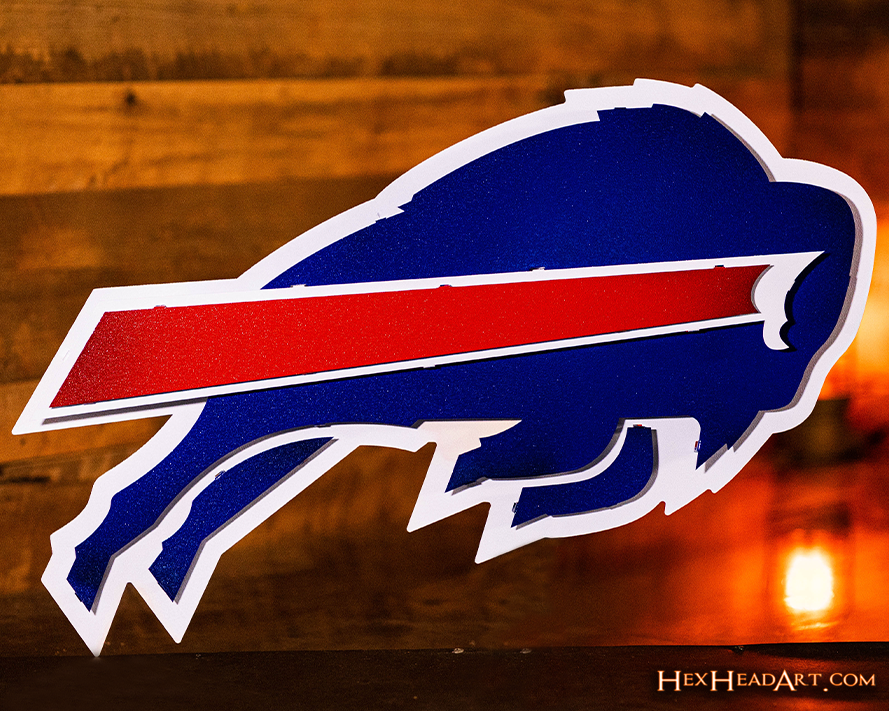
What Are Some Unique Man Cave Ideas? 2026 Guide
Looking for unique man cave ideas in 2026? From 3D layered metal art to leather furniture, here's how to build a space that actually feels like yours.
Read more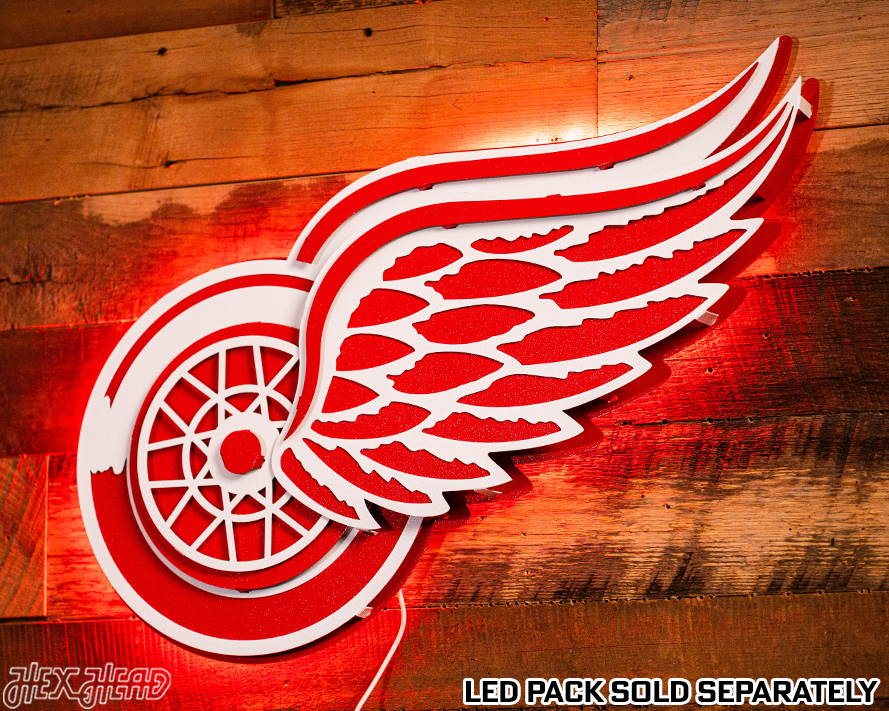
What's Trending for Wall Decor in 2026?
From 3D metal team art to woven textiles, here's what's actually trending for wall decor in 2026 — and how to pick what lasts in your space.
Read more
Leave a comment
This site is protected by hCaptcha and the hCaptcha Privacy Policy and Terms of Service apply.